
MILAN IMAGE ART FAIR 2026
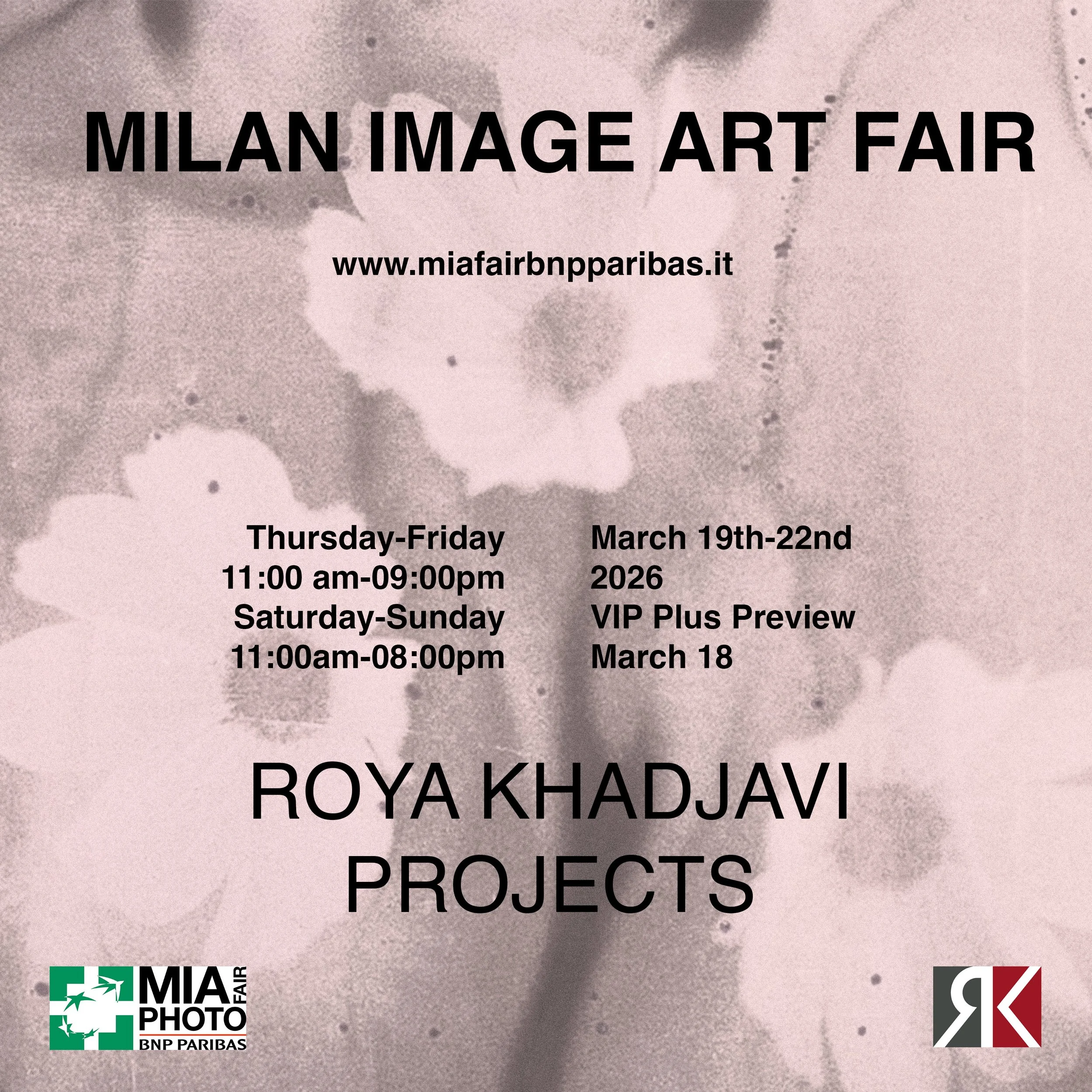
Roya Khadjavi Projects is pleased to announce its participation in MIA Photo Fair 2026 (Milan Image Art Fair).
Roya Khadjavi is delighted to participate in this year’s edition of the fair with the exhibition:
Metamorphosis: Four Visions of Transformation
VIP Plus March 18th
March 19th–22nd, 2026
Thursday–Friday 11:00 am–09:00 pm
Saturday–Sunday 11:00 am–08:00 pm
Metamorphosis is rarely gentle. It demands the dissolution of one form before another can emerge, a violent tenderness that reshapes identity, perception, and meaning. The four photographic series in this exhibition—spanning Tehran's bridal workshops to buried film canisters, from surreal botanic to suspended bodies—each navigate this threshold where transformation becomes visible, tangible, and profoundly human.
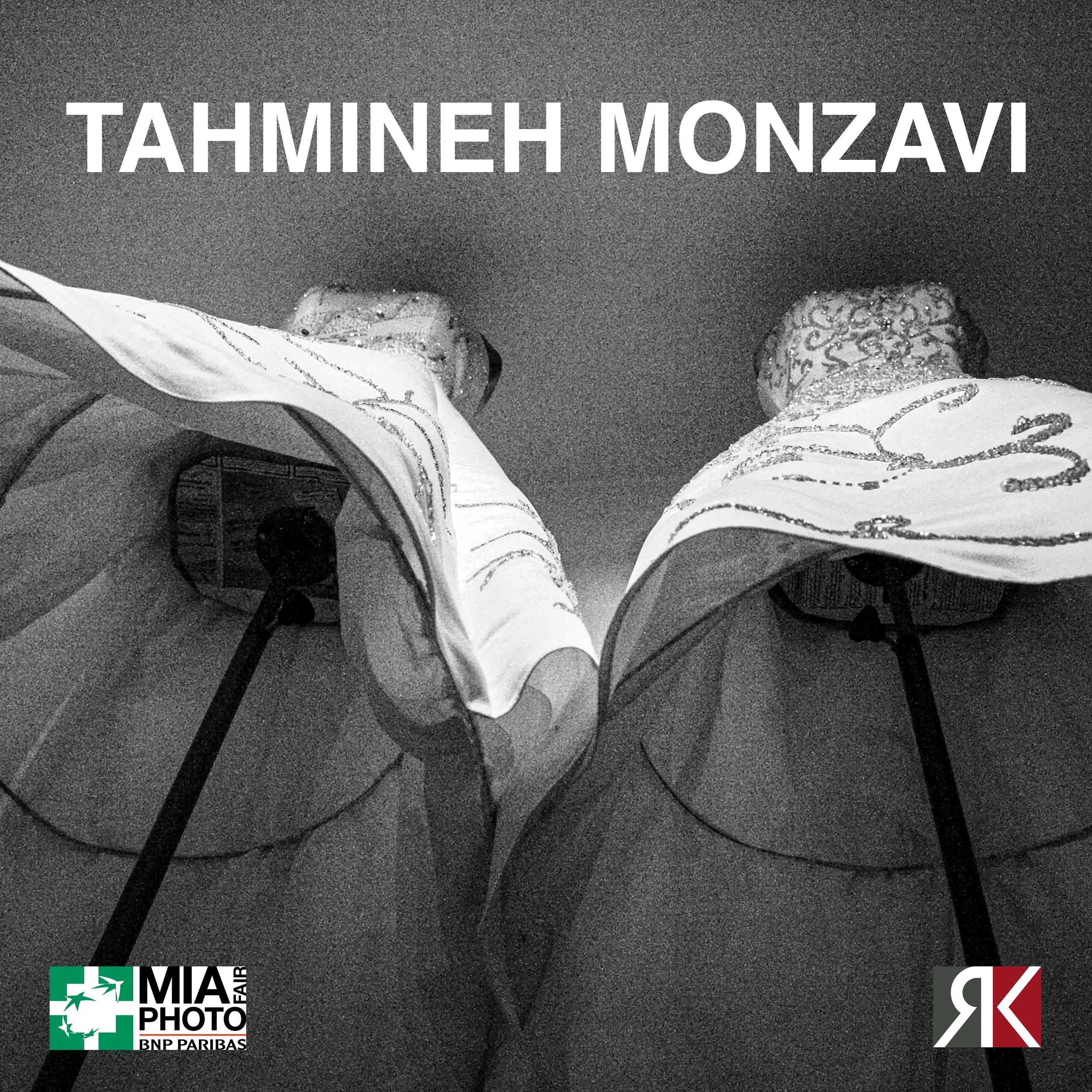
Tahmineh Monzavi's "Brides of Mokhber-al-Dowleh" presents metamorphosis as social alchemy. In the dilapidated workshops of southern Tehran, young male tailors transform raw silk into symbols of feminine aspiration, their scissors cutting through fabric and cultural boundaries alike. The mutilated mannequins—breasts sliced away to satisfy morality codes—embody transformation's brutal cost, yet these same violated forms hold pristine white gowns that represent hope, fantasy, and futures imagined. Here, metamorphosis operates in multiple registers: boys becoming creators of feminine dreams, fabric becoming fantasy, and masculine spaces adopting feminine appearances. The surreal atmosphere Monzavi captures—masculine hands crafting girlish fantasies amid the noise of radios and laughter—suggests that transformation is always incomplete, always caught between states, creating spaces where contradictions don't resolve but rather intensify into something entirely new.
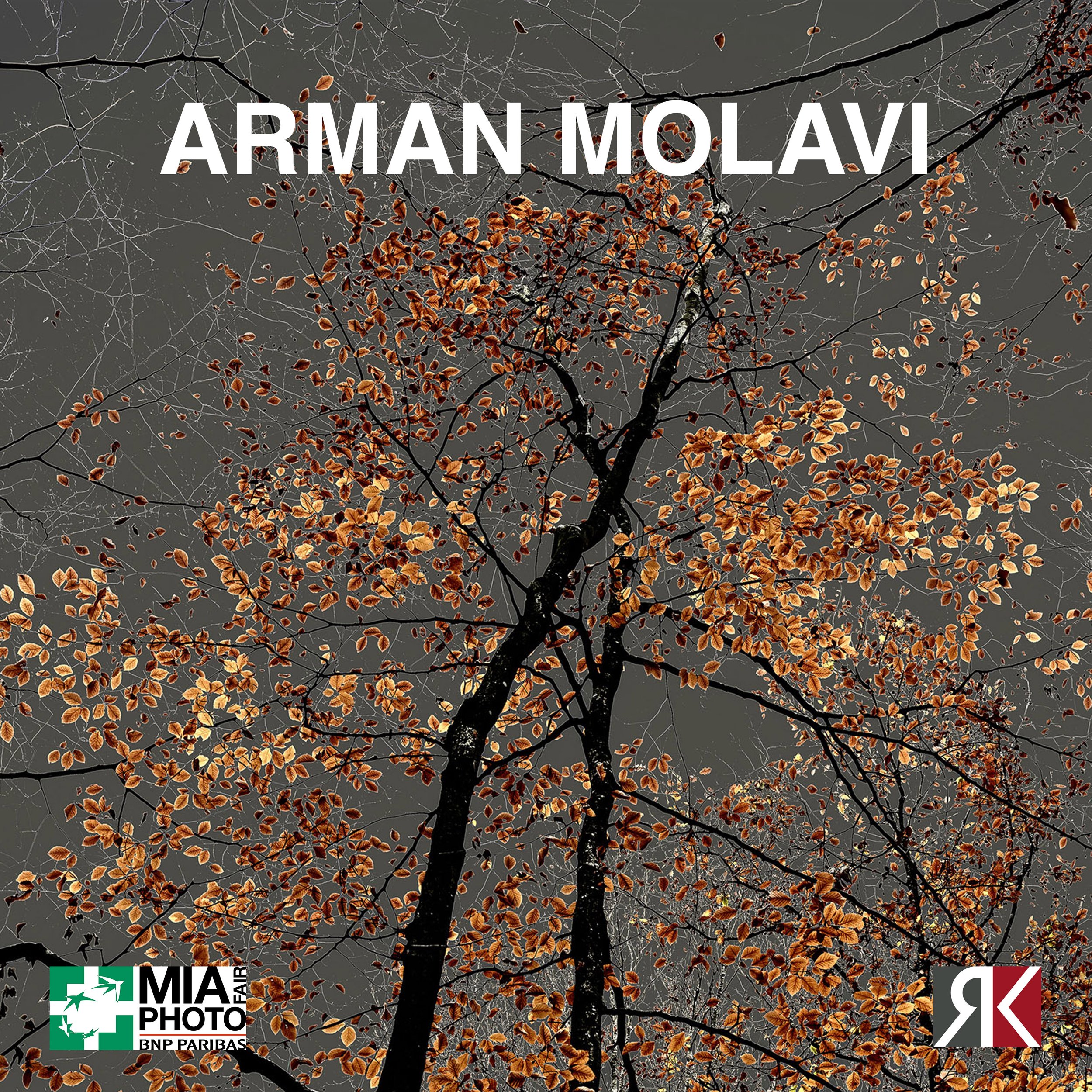
Arman Molavi's "Surreal Botanics" approaches transformation through perception itself. His photographs don't merely document flowers and leaves; they metamorphose our understanding of the natural world. By employing rich Renaissance-inspired backgrounds, vivid colors that border on the unnatural, and techniques that blur the line between photography and painting, Molavi transforms botanical subjects into emotional landscapes. The anatomically shaped leaves and sensual flowers become vessels for human feeling, their fiery hues and delicate light suggesting that transformation isn't just physical but psychological. Nature itself undergoes metamorphosis through the artist's lens, distorted and intensified until it reveals what Molavi calls "hidden aspects" ordinarily invisible to conventional sight. This is transformation as revelation: the external world reshape to mirror internal states.
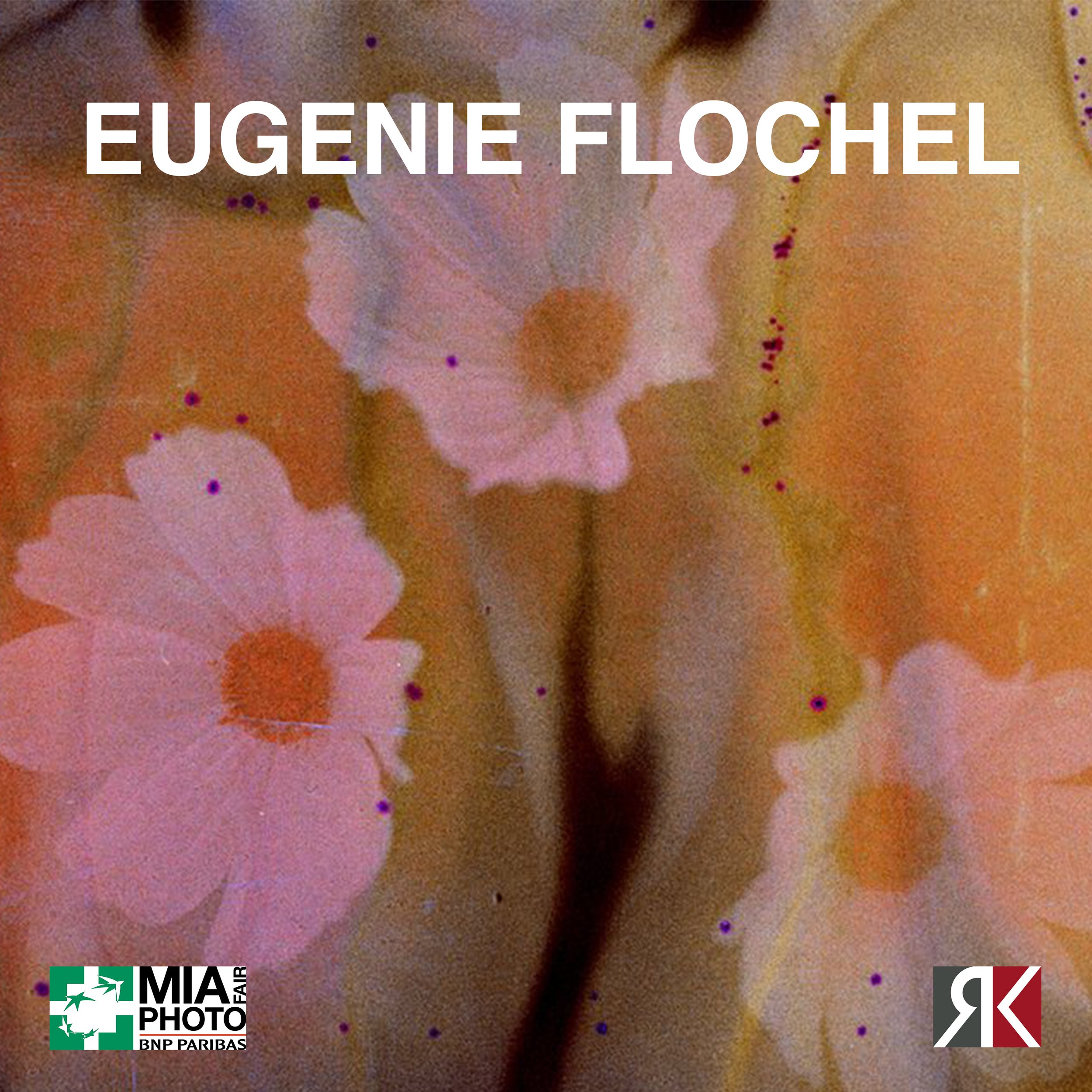
With "Eudemonia," Eugenie Flochel Jahanshahi literalizes photographic metamorphosis by subjecting her film to the transformative forces of earth, water, and time. Buried among violets for six weeks, the negatives undergo their own death and rebirth, emerging marked by soil and chance. This process embodies the Ancient Greek concept of human flourishing through the material transformation of the photographic medium itself. The burial and exhumation become ritual acts, where letting go—of control, of predetermined outcomes—allows for unexpected beauty. Flochel's work suggests that genuine transformation requires surrender, patience, and collaboration with forces beyond our control. The resulting images carry the literal residue of their metamorphosis, making visible the passage through darkness toward renewal.
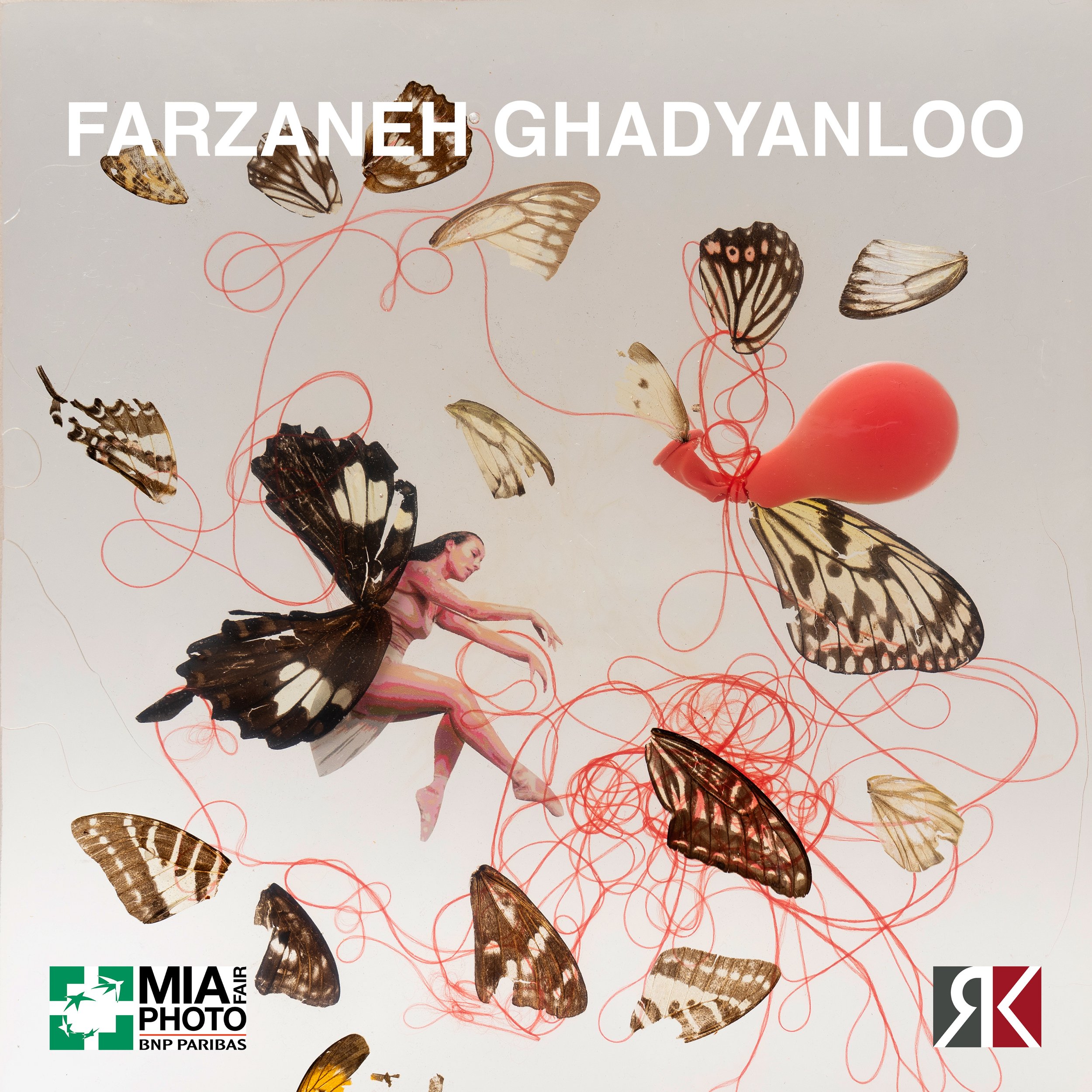
Farzaneh Ghadyanloo's "The Choreography of Collapse" captures bodies suspended mid-transformation, frozen in the instant between falling and flying. Her subjects hang in perpetual metamorphosis, neither grounded nor free, embodying what she calls "the paradox of longing." The deflated balloons suggest constraints and collapse possibilities, while wings hint at transcendence that remains tantalizingly incomplete. This suspension—this refusal of resolution—may be the most honest representation of transformation in the exhibition. Ghadyanloo acknowledges that metamorphosis isn't always conclusive, that we often remain caught between states, carrying both our limitations and our aspirations simultaneously.
Together, these works propose that metamorphosis is not a singular event but an ongoing condition—simultaneously violent and tender, controlled and chaotic, external and internal. Whether through cultural contradiction, perceptual distortion, material decay, or physical suspension, transformation emerges as the fundamental state of existence itself: perpetual, incomplete, and profoundly beautiful in its instability.